Blog do IFZ| 30/06/2025
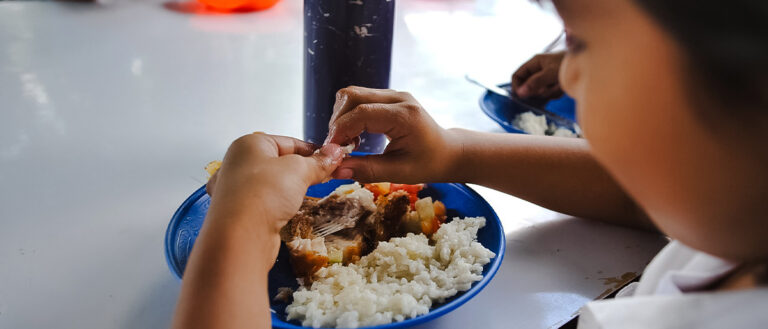
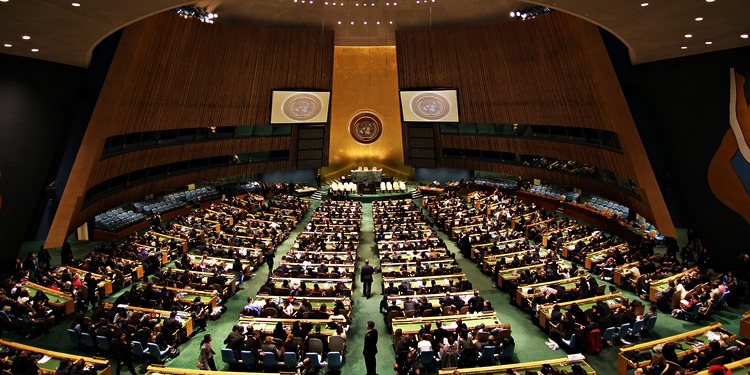
ROMA — O Papa Leão XIV condenou nesta segunda-feira (30) o uso da fome como instrumento de guerra. Em mensagem enviada à 44ª Conferência da FAO (Organização das Nações Unidas para Alimentação e Agricultura), realizada em Roma, o pontífice alertou para o agravamento da insegurança alimentar em zonas de conflito e denunciou táticas que utilizam o bloqueio de recursos básicos como forma de dominação.
“Estamos assistindo com desespero ao uso iníquo da fome como arma de guerra. Matar pessoas à fome é uma forma muito barata de fazer guerra”, afirmou.
Embora não tenha citado diretamente a guerra em Gaza, a fala do Papa coincide com as denúncias recorrentes de agências internacionais e organizações humanitárias sobre o agravamento da crise alimentar no território palestino. Desde o início do conflito entre Israel e o Hamas, em outubro de 2023, mais da metade da população de Gaza enfrenta fome severa, segundo dados da ONU.
Papa fala em controle de populações desarmadas
Na mensagem, Leão XIV destacou que, nos conflitos contemporâneos, muitas vezes conduzidos por grupos armados ou forças irregulares, a destruição de infraestrutura civil e o bloqueio à ajuda humanitária são usados como estratégias de guerra.
“Bloquear a ajuda humanitária é uma tática cada vez mais utilizada por aqueles que procuram controlar populações inteiras desarmadas”, afirmou. O Papa também ressaltou que redes de abastecimento de água e rotas de transporte se tornaram alvos frequentes, afetando diretamente agricultores e elevando os custos dos alimentos.
Especialistas veem a fala como uma crítica velada à situação em Gaza, onde, segundo relatos de campo, ataques a armazéns de alimentos, hospitais, escolas e fontes de água têm sido recorrentes. Organizações como a ONU, a Cruz Vermelha e Médicos Sem Fronteiras alertam para o risco iminente de fome em massa, especialmente no norte do enclave.
Críticas ao enriquecimento durante conflitos
O pontífice também chamou atenção para o lucro gerado por guerras prolongadas. “Enquanto os civis definham na miséria, os líderes políticos enriquecem com os lucros do conflito”, declarou. Leão XIV destacou que, além da destruição de vidas e comunidades, os conflitos armados comprometem a produção agrícola, a economia local e o direito das populações a uma vida digna.
Ele alertou ainda que a ausência de paz e estabilidade compromete qualquer tentativa de estabelecer sistemas alimentares sustentáveis e resilientes. “Será um erro fatal não curar as feridas causadas por anos de egoísmo e superficialidade”, afirmou.
Vaticano eleva o tom, mas evita confronto direto
O Vaticano tem mantido uma postura crítica em relação ao agravamento da crise em Gaza, ainda que evite mencionar diretamente Israel ou outros atores do conflito. A fala de Leão XIV segue essa linha, adotando um tom contundente sobre as consequências humanitárias da guerra, sem entrar no terreno da diplomacia explícita.
Apesar disso, sua mensagem fortalece os apelos da comunidade internacional por um cessar-fogo duradouro, pela proteção de civis e pela garantia de acesso irrestrito à ajuda humanitária.
A conferência da FAO ocorre em um momento em que o tema da segurança alimentar se torna central em várias regiões do mundo, não apenas devido aos conflitos armados, mas também às mudanças climáticas, crises econômicas e desigualdades estruturais. A fala do Papa insere-se nesse debate, lembrando que, em muitas guerras, a fome não é apenas uma consequência — mas uma arma deliberada.
Mensagem do Papa Leão XIV aos participantes da Conferência da FAO
MESSAGE OF POPE LEO XIV
TO PARTICIPANTS IN THE 44th SESSION OF THE FAO CONFERENCE
Mr. President,
Mr. Director-General of the FAO,
Your Excellencies,
Distinguished Ladies and Gentlemen:
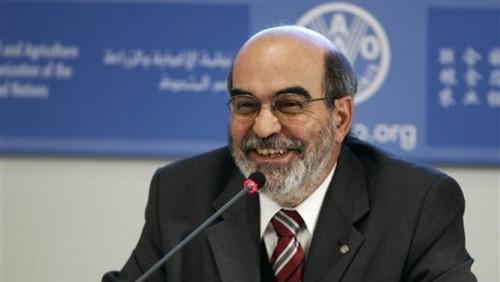
I am very grateful to have the opportunity to address, for the first time, the United Nations Food and Agriculture Organization (FAO), which this year celebrates the eightieth anniversary of its founding. I warmly greet all those who are participating in this forty-fourth session of the Conference, its supreme governing body, and in particular the Director-General, Mr. Qu Dongyu, in appreciation of the work the Organization is doing on a daily basis to seek adequate responses to the problem of food insecurity and malnutrition, which continues to represent one of the greatest challenges of our time.
The Church encourages all initiatives to put an end to the outrage of hunger in the world, making her own the sentiments of her Lord, Jesus, who, as the Gospels narrate, when he saw a great multitude coming to him to hear his word, was concerned first of all to feed them, and for this purpose asked the disciples to take charge of the problem, abundantly blessing the efforts they made (cf. Jn 6:1-13). However, when we read the account of what is commonly called the “multiplication of the loaves” (cf. Mt 14:13-21; Mk 6:30-44; Lk 9:12-17; Jn 6:1-13), we realize that the real miracle performed by Christ was to show that the key to overcoming hunger lies in sharing rather than in greedily hoarding. This is something we may have forgotten today because, although some significant steps have been taken, global food security continues to deteriorate, making it increasingly unlikely that the “Zero Hunger” goal of the 2030 Agenda will be achieved. This means that we are far from fulfilling the mandate that gave rise to this intergovernmental institution in 1945.
There are people who suffer grievously and long for solutions to their many needs. We are well aware that they cannot solve them by themselves. The continuing tragedy of widespread hunger and malnutrition, which persists in many countries today, is sadder and more shameful when we realize that, although the earth is capable of producing enough food for all human beings, and despite international commitments to food security, it is unfortunate that so many of the world’s poor still lack their daily bread.
On the other hand, we are currently witnessing with despair the iniquitous use of hunger as a weapon of war. Starving people to death is a very cheap way of waging war. That is why today, when most conflicts are not fought by regular armies but by groups of armed civilians with few resources, burning land and stealing livestock, blocking aid are tactics increasingly used by those who seek to control entire unarmed populations. Thus, in this type of conflict, the first military targets become water supply networks and communication routes. Farmers are unable to sell their produce in environments threatened by violence, and inflation soars. This leads to huge numbers of people succumbing to the scourge of starvation and perishing, with the aggravating circumstance that, while civilians languish in misery, political leaders grow fat on the profits of the conflict.
It will not help to postpone a solution to this devastating situation; on the contrary, the anguish and hardship of the needy will continue to grow, making the road even harder and more convoluted. It is therefore imperative to move from words to deeds, putting at the centre effective measures that will enable these people to look at their present and their future with confidence and serenity, and not just with resignation, thus putting an end to the era of slogans and misleading promises. In this respect, we must not forget that sooner or later we will have to give an explanation to future generations, who will receive a legacy of injustices and inequalities if we do not act wisely now.
Political crises, armed conflicts and economic turbulence play a central role in the worsening of the food crisis, hindering humanitarian aid and compromising local agricultural production, thus negating not only access to food, but also the right to lead a life of dignity and opportunity. It would be a fatal error not to heal the wounds and fractures caused by years of selfishness and superficiality. Likewise, without peace and stability, it will not be possible to guarantee resilient agricultural and food systems, nor to ensure a healthy, accessible and sustainable food supply for all. Hence the need for dialogue, where the parties involved are not only willing to talk to each other, but also to listen to each other, to understand each other and to act together. There will be no shortage of obstacles, but with a sense of humanity and fraternity, the results can only be positive.
Food systems have a major influence on climate change, and vice versa. The social injustice caused by natural disasters and the loss of biodiversity must be reversed in order to achieve a just ecological transition, that places the environment and people at the centre. To protect ecosystems and disadvantaged communities, including indigenous peoples, the mobilization of resources by governments, public and private entities, national and local agencies is needed to adopt strategies that prioritize the regeneration of biodiversity and soil richness. Without decisive and coordinated climate action, it will be impossible to guarantee agricultural and food systems capable of feeding a growing world population. Producing food is not enough: it is also important to ensure that food systems are sustainable and provide healthy and affordable diets for all. It is therefore a matter of rethinking and renewing our food systems, from a perspective of solidarity, overcoming the logic of the savage exploitation of creation and better guiding our efforts to cultivate and care for the environment and its resources, to ensure food security and move towards sufficient and healthy nutrition for all.
Mr President, at the present time, we are witnessing a huge polarization in international relations due to the existing crises and confrontations. Financial resources and innovative technologies are being diverted from the eradication of poverty and hunger in the world to the manufacture and trade of weapons. In this way, questionable ideologies are promoted while human relations cool, debasing communion and stifling fraternity and social friendship.
Never before has it been more urgent than it is now for us to become peacemakers working for the common good, for what is good for all and not just for the few, who are always the same. To ensure peace and development, understood as the improvement of the living conditions of populations suffering from hunger, war and poverty, concrete actions are needed, rooted in serious and far-sighted approaches. We must therefore leave aside sterile rhetoric and, with firm political will, as Pope Francis said, “resolve conflicts and thus … foster a climate of reciprocal cooperation and trust for the sake of meeting common needs”. [1]
Ladies and gentleman, in order to achieve this noble cause, I wish to assure you that the Holy See will always be at the service of concord among peoples and will never tire of cooperating for the common good of the family of nations, with special regard for the most afflicted human beings, who suffer hunger and thirst, and also for those remote regions which cannot rise from their prostration because of the indifference of those for whom the exercise of unfailing solidarity should be an emblem of their lives. With this hope, and as a voice for all those in the world who are stricken by destitution, I pray to Almighty God that your work may bear fruit and be of benefit to the underprivileged and to humanity as a whole.
_______________________________________
[1] Address to members of the Diplomatic Corps accredited to the Holy See (9 January 2023).
Holy See Press Office Bulletin, 30 June 2025
Fontes: Agência Brasil, LUSA e FAO
https://agenciabrasil.ebc.com.br/internacional/noticia/2025-06/em-conferencia-da-fao-papa-condena-uso-da-fome-como-arma-de-guerra