
Blog do IFZ | 05/06/2025
Download here the article “La tierra y las reformas agrarias en América Latina: una mirada al pasado y perspectivas”
Latin America’s agrarian history is marked by profound contradictions. From the colonial period—when land was concentrated in the hands of a privileged elite through institutions such as sesmarias and encomiendas—to the present day—when land grabbing and the increasing foreign ownership of rural areas challenge national sovereignty—the issue of land remains central to the region’s development. Within this context, the study “La tierra y las reformas agrarias en América Latina: una mirada al pasado y perspectivas” by sociologist Sergio Gómez, Associate Professor at FLACSO-Chile and former consultant to the Food and Agriculture Organization of the United Nations (FAO), offers a comprehensive perspective on the agrarian transformations across the subcontinent.
Originally presented in 2008 and revised in 2014, the work provides a detailed analysis of the agrarian reforms implemented throughout the twentieth century, highlighting both their achievements and limitations, as well as the contemporary landscape of land concentration. Gómez, who has also participated in reform processes in Chile, combines academic rigor with a critical perspective, avoiding oversimplifications and acknowledging the complexity of an issue that remains both current and contentious.
The roots of inequality: from the Colonial Era to the Twentieth Century
To understand Latin America’s agrarian reforms, one must trace back to the colonial era, when land tenure systems were shaped by Spanish and Portuguese domination. The unequal distribution of land—consolidated through haciendas and plantations—engendered a stratified rural society in which a minority controlled vast territories, while the majority—including Indigenous peoples and peasants—lived under conditions of subsistence or servitude. This structure, known as the latifundio–minifundio complex, persisted even after the nineteenth-century national independence movements, preserving the rural power structures intact.
It was not until the twentieth century—amid escalating social tensions and the growing imperative for modernization—that agrarian reforms emerged as political responses to inequality. Gómez underscores that, while each country followed a distinct path, three early and paradigmatic cases stand out: Mexico, Bolivia, and Cuba.
Agrarian Reforms in Latin America: between revolutions, contradictions, and the Cold War
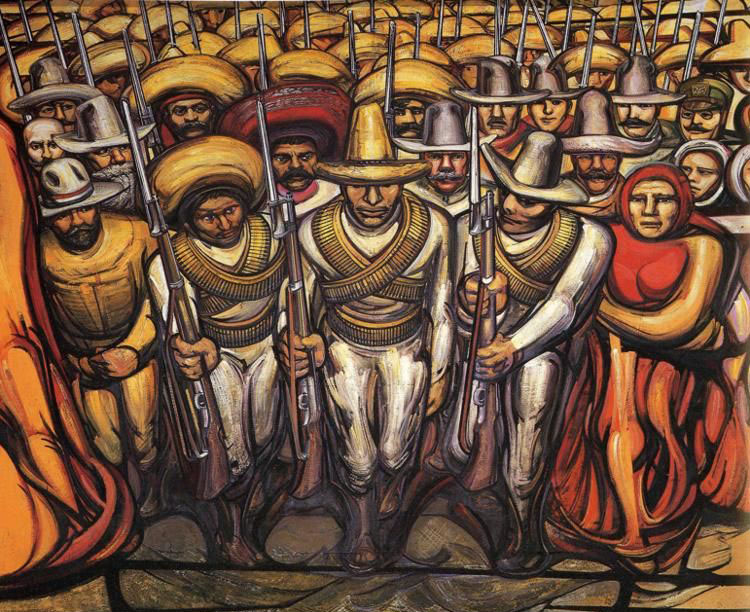
The twentieth century witnessed a series of profound agrarian transformations across Latin America, marked by significant advances as well as enduring paradoxes. In Mexico, the 1910 Revolution, propelled by the emblematic Zapatista slogan “La tierra para quien la trabaja“, launched a land redistribution process that spanned decades. This included the establishment of ejidos—inalienable collective lands that benefited millions of peasants. However, as Gómez notes, despite the massive scope of the reform (over 100 million hectares redistributed), it failed to overcome the economic marginalization of the rural population. While the peasant sector remained stagnant, modern agriculture thrived within medium and large private enterprises, revealing the contradictions of a model that prioritized social justice without guaranteeing productive efficiency.
In Bolivia, the 1952 National Revolution enacted one of the continent’s most radical reforms, abolishing latifundia and servile labor in the highlands. Yet the reformed regions continued to suffer from poverty, while agricultural modernization concentrated in Santa Cruz—a region largely untouched by redistribution. This paradox underscores one of the central dilemmas of agrarian reform: the disjunction between land access and sustainable rural development.
![Revolução Boliviana 1953 [Cena do filme “Nossa Voz de Terra – Memória e Futuro”]](https://ifz.org.br/wp-content/uploads/2025/06/Revolucao-Boliviana-1953-Cena-do-filme-Nossa-Voz-de-Terra-–-Memoria-e-Futuro.jpg)
Cuba’s 1959 reform, followed by a second law in 1963, nationalized large estates and placed 84% of cultivable land under state control. This transformation made Cuba a continental symbol that both inspired peasant movements and prompted the U.S. to launch the Alliance for Progress—an initiative that tied development aid to moderate reforms in other Latin American countries.

From the 1960s onward, under the influence of the Cold War and fears of socialist revolutions, several Latin American governments enacted agrarian legislation—often as a formality to access international resources. Nonetheless, in countries such as Chile and Peru, these reforms acquired greater depth and significance.
In Chile, the administrations of Eduardo Frei Montalva (1964–1970) and Salvador Allende (1970–1973) promoted massive land redistribution, which was brutally reversed by the 1973 military coup.
In Peru, General Velasco Alvarado’s regime (1968–1975) undertook a unique reform that replaced latifundia with cooperatives, which later fragmented into small family farms—demonstrating both the potential and the limits of collectivist experiments.
Most Latin American countries enacted agrarian reforms at various times and scales, with varying degrees of implementation. These cases reveal how reforms have been shaped not only by internal demands but also by geopolitical pressures and unresolved structural contradictions.
The contemporary scenario: land grabbing, concentration, and new actors
While twentieth-century reforms aimed to dismantle traditional latifundia, the study warns of a new, equally troubling phenomenon: the concentration and foreign acquisition of land, driven by international investors, capital funds, and agro-industrial conglomerates. FAO data cited by Gómez indicate that in countries such as Brazil and Argentina, average landholdings often exceed 15,000 hectares and are primarily dedicated to the export-oriented production of commodities—frequently at the expense of local food security.
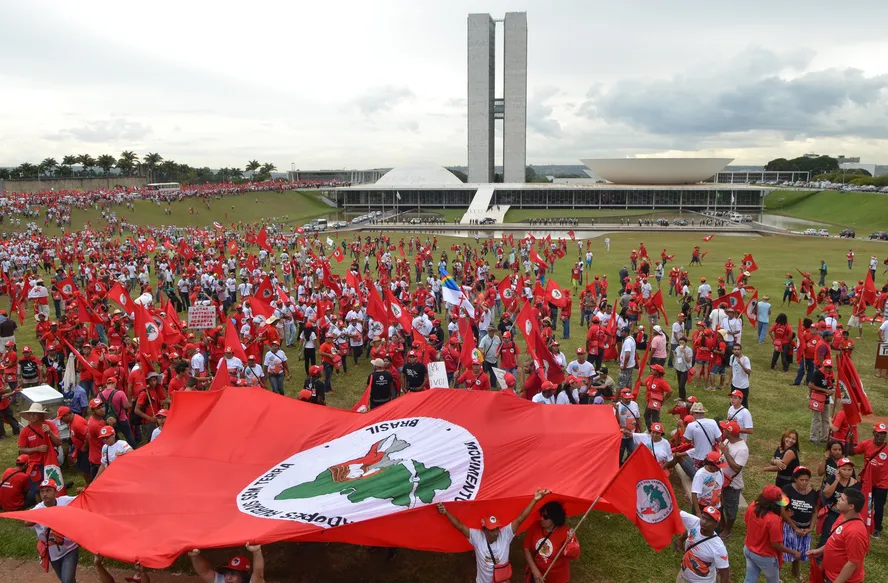
In response to this context, the study emphasizes the significance of the Voluntary Guidelines on the Responsible Governance of Tenure of Land (2012), an international framework that proposes non-coercive mechanisms to promote equitable access to natural resources. Gómez argues that unlike past reforms—typically conceived as “social constructs” shaped by specific historical contexts—the current challenge demands flexible mechanisms, negotiated with key stakeholders, that can harmonize economic development, social justice, and environmental sustainability.
Discussion: agrarian reform as an unfinished agenda
Agrarian reform is generally understood as a set of policies, measures, and legislative changes—carried out with varying degrees of beneficiary participation—intended to alter land ownership and tenure structures in a given country or region. Its primary objective is to promote a more equitable redistribution of land, enhance access for smallholders and peasants, increase agricultural output, and reduce social inequalities.
Historically, agrarian reforms were initiated and implemented primarily during the twentieth century. Today, however, opinions diverge. Some argue that the process is complete, asserting that latifundia no longer represent the dominant landholding model. Others maintain that the reform agenda remains unfinished, as its central aims—such as rural poverty alleviation—have not been fully achieved. Moreover, new challenges have emerged, including food security, climate change, and particularly the phenomenon of land grabbing.
The current level of land concentration surpasses even that of the pre-reform era. In parallel, modern, competitive agriculture faces pressing issues that require urgent policy responses, including sustainability and the inclusion of small-scale farming.
The Voluntary Guidelines and the Responsible Governance of Land Tenure
The Voluntary Guidelines on the Responsible Governance of Tenure of Land, Fisheries and Forests in the Context of National Food Security (VGGT), endorsed in 2012 by the FAO’s Committee on World Food Security, constitute an international benchmark for the governance of these resources. The guidelines embody a set of principles and standards aimed at guiding land tenure practices and administration.
They emerged from an extensive negotiation process involving governments, civil society representatives, and academia at national, regional, and global levels under the coordination of the Committee on World Food Security. Their formulation coincided with the global emergence of large-scale land acquisitions, driven by three simultaneous crises:
- A food crisis, due to the explosive growth in global demand;
- An energy crisis, prompting large-scale cultivation of biofuel crops;
- A financial crisis, which positioned land as a secure asset for investors.
This dynamic has transformed land markets, bringing in not only traditional investors but also investment funds and even governments as buyers. While initially prominent in Africa and Asia, this phenomenon is increasingly visible in Latin America and the Caribbean as well.
There remains an unresolved debate concerning the relationship between the implementation of the VGGT and the broader agenda of agrarian reform. A nuanced dialogue is needed—one that recognizes the complexity of these evolving issues and respects the legitimacy of divergent arguments.
Lessons for the Future
By revisiting Latin America’s agrarian reforms, Sergio Gómez’s study not only recovers a history of struggle and achievement but also offers a critical reflection on current and future challenges. While in the twentieth century the agrarian question centered on redistribution, today it encompasses a broader array of concerns, including food sovereignty, climate change, and Indigenous rights.
The study concludes that although the reforms were pivotal in dismantling servile labor relations and reducing historical inequalities, their legacy remains incomplete. Moving forward, innovative policies will be required to combine democratized land access with inclusive rural development strategies—a path still under construction, yet essential for a more just and sustainable Latin America.
Download here the article “La tierra y las reformas agrarias en América Latina: una mirada al pasado y perspectivas”
