By Carlos Madeiro for UOL | 5 October 2025
Bolsa Família once again faces a significant waiting list, ending September with 750,000 pre-qualified individuals still waiting to be included in the programme.
The programme’s 2025 budget has reached its limit, preventing the creation of new places for beneficiaries this year. Over the past four months, the number of families served has dropped from 20.5 million to 19 million.
Number of beneficiary families (2025)
- June: 20,499,027
- July: 19,643,895 (–855,132)
- August: 19,192,507 (–451,388)
- September: 19,070,938 (–121,569)
At the same time as families were removed, the programme did not admit those who had approached the government declaring need, who had been pre-selected and should already have begun receiving monthly payments.
In September, 848,000 families were pre-qualified, but only 97,000 (11.4%) were accepted. In August, the figures were similar: 823,000 pre-qualified and 114,000 admitted (13.8%).
UOL contacted the Ministry of Social Development and the Fight against Hunger (Ministério do Desenvolvimento e Assistência Social, Família e Combate à Fome — MDS) to ask why the waiting list had grown. In a statement, the ministry said there is no fixed deadline for admitting families and explained: “Families enter and leave the programme on a monthly basis, which is also linked to the programme’s budget.”
In many cases, admission may occur within 45 days, although the period can vary depending on the volume of applications and budget availability. The MDS stated that it continuously monitors these flows to ensure the regularity of the process and the expansion of coverage, in accordance with fiscal conditions and current legislation. Each month, all families registered in the Single Registry (CadÚnico) undergo an automated and impartial assessment, which considers criteria such as eligibility, updated registration details, and the accuracy of the information provided, in addition to other requirements set out in the programme’s regulations. — MDS statement
Budget without a gap
For 2025, the approved budget for Bolsa Família was R$158.6 billion (R$9.6 billion less than last year). Of this total, R$120 billion had already been spent by September.
Based on a simple calculation using the September payroll, which cost R$12.9 billion, the MDS will require R$38.7 billion to maintain benefits, meaning there is no margin to create new places for beneficiaries.
This column asked the MDS whether a request for a budget supplement would be made, but there was no response.
Why fewer beneficiaries?
There are two main explanations for the drop in the number of beneficiaries: inspections that removed families with incomes above the permitted threshold, and the end of the protection rule in July.
The protection rule was introduced in July 2023 to provide temporary financial support to families in the programme whose income had risen above the poverty line. To help them achieve financial independence, the government allowed them to continue receiving benefits for an additional 24 months. After two full years, 536,000 families were removed from the programme.
In July, the MDS celebrated that almost 1 million people would leave the programme due to increased income. Most of them (536,000), said the ministry, had completed 24 months under the protection rule. Another 385,000 households exceeded R$759 (half the minimum wage) per person in income in July.
The column also found that, aware of a smaller budget in 2025, the MDS carried out a major review this year. In August, the ministry published a report stating that 576,000 families had their payments permanently cancelled — most because they did not respond to the call for registration regularisation.
The ministry also reported that another 675,000 beneficiary families had their payments blocked due to the registration review required by a normative instruction issued in February.
This instruction determined two types of thorough reviews:
- Registration verification, for records with possible inconsistencies;
- Registration review, for outdated records.
In addition to the thorough review, another common reason for benefits being cut is the failure of families with children to meet programme conditions.
In August, 40,000 families had their benefits suspended for failing, for a second consecutive month, to prove school attendance and vaccination of their children.
In such cases, when a deficiency is noticed, beneficiaries are always notified via statement messages or through the app and have 60 days to confirm the data.
Size of the queue
The existence of a waiting list for the programme is not unprecedented; on other occasions, it has reached more than 1 million families.
The September queue is the second largest in a month under the Lula administration: in July 2023, it had already reached 966,000 families. This queue was practically eliminated in April but grew again in the second half of the year.
Queue by month (2025):
- April: 6 families in the queue
- May and June: no information available
- July: 176,549
- August: 709,135
- September: 750,451
Months with the longest waiting lists for Bolsa Família/Auxílio Brasil:
- May 2015: 1,919,952
- April 2015: 1,860,332
- March 2020: 1,655,873
- June 2015: 1,636,341
- February 2020: 1,590,240
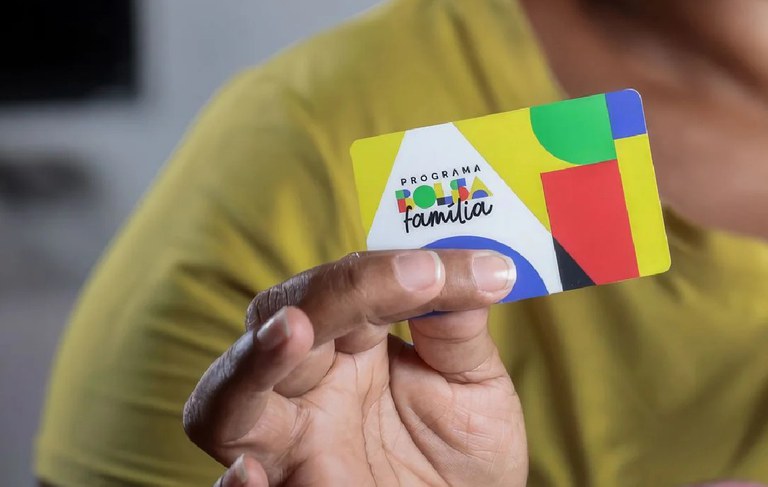
About Bolsa Família
To be eligible for the benefit, families must be registered with CadÚnico and keep their information up to date. Income criteria are set by the federal government, and the following are eligible:
- Families in extreme poverty (with a monthly income of up to R$105 per person);
- Families in poverty (with a monthly income between R$105.01 and R$218 per person), provided they include pregnant women, nursing mothers, children, or young people up to the age of 21.
Bolsa Família guarantees a minimum benefit of R$600 per family, with two additional payments available:
- Early Childhood Benefit: R$150 per child up to six years of age;
- Variable Family Benefit: R$50 paid to pregnant women, nursing mothers, and young people aged 7 to 21.
Priority for entry into the programme is given to quilombola families, indigenous people, individuals rescued from slave-like labour, victims of child labour, waste pickers, homeless people, and those in situations of severe social vulnerability or malnutrition (the last three groups were included by the government in July).
Originally published on UOL
https://noticias.uol.com.br/colunas/carlos-madeiro/2025/10/05/bolsa-familia-tem-orcamento-no-limite-e-deixa-750-mil-em-fila-de-espera.htm