Former FAO-Chief José Graziano da Silva demonstrated in his home country of Brazil how hunger can be combated successfully. A discussion about warnings on packages, laboratory food, reform of the UN and the struggle against international agricultural and food lobbyists
By Sandra Weiss in Welternährung | 10/2025
José Graziano da Silva from Brazil has dedicated his whole life to combating hunger and poverty. In his first presidential term, Brazil’s President Luiz Inácio Lula da Silva appointed the agronomist as Minister for Food Security in 2003. Graziano da Silva then implemented the famous Fome Zero (Zero Hunger) program that lifted around 28 million Brazilians out of poverty and reduced malnutrition by 25 percent. In 2012, he was elected as the first Latin American Director-General of the Food and Agriculture Organization (FAO) of the United Nations. During his seven years in office, he decentralized the organization and involved civil society in policymaking. Today, José Graziano da Silva heads the non-governmental organization Instituto Fome Zero that is promoting the UN development goal of „zero hunger” globally.
Sandra Weiss: Mr. Graziano da Silva, the United Nations has just removed Brazil for the second time in 25 years from the world hunger map. Both under President Lula da Silva. As you are considered the „father of the zero hunger program“, would you tell us your secret on how to defeat hunger?
José Graziano da Silva: I think Brazil illustrates that it is fundamentally a political decision. Since the Green Revolution in the 1970s, the world has been producing more than enough to feed everyone. It is a problem of distribution. And not just the distribution of food, but the distribution of income. People don’t have the money to buy food. That’s the big issue.
Well, that was more or less the situation when Lula came to power in 2003 due to an economic crisis. So what did you do?
For Lula, fighting hunger was a political priority and a campaign promise. So we had a plan. First, we undertook macroeconomic policies to generate more employment and better income by increasing the minimum wage. I think this is the most important point. But to reach the poorest, those who live in incredible poverty and don’t profit to the same extent from job generation, we created a targeted income transfer program, the Bolsa Família. They received a kind of debit card where the government deposited some money every month that allowed them to go to the supermarket and buy food.
Brazil demonstrates that it is a political decision whether one wants to overcome hunger. – José Graziano da Silva
But nutrition is not only about quantity; it is also about quality. What did you do about that?
Our problem today is not just feeding people. It is to give them access to healthy food. We created two programs which we have also exported to Africa with great success. The first one is a school meal program that buys 30%, essentially fresh fruits and vegetables, from local family farmers. If the food is organic, they receive a higher price. In addition, we created farmers markets. Essentially, it is a short distribution circuit from family farms directly to consumers. This program focuses on delivering quality, fresh products to urban peripheries.
Why did you concentrate on urban peripheries?
We are facing in Brazil and elsewhere an obesity epidemic, especially among children and pregnant women. This compromises a future generation. Today, if you go to the outskirts of the large cities, you will have a hard time finding fruit and vegetables. But you do find a huge amount of little shops selling soft drinks, pastries, hamburgers, and generally ultra-processed products with high sugar, salt, and trans-fat content.

© Ricardo Stuckert/PR, Palácio do Planalto via Flickr
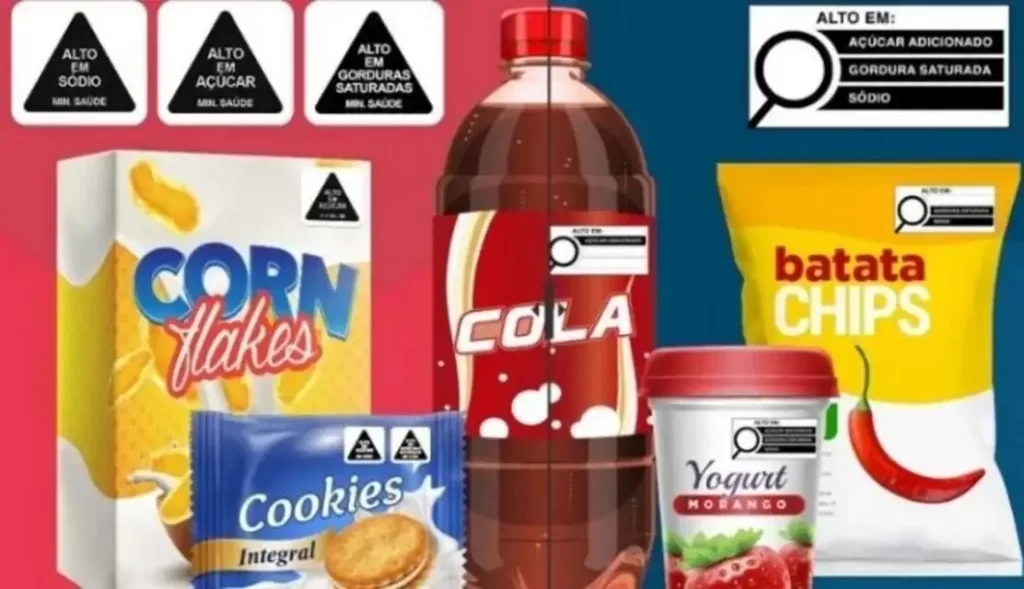
Obesity is indeed a global problem. But Brazil and other Latin American countries at least implemented some interesting public policies, such as the black octagon labels to warn consumers of products with a lot of fat, sugar, salt, and calories. To date, Germany has only a voluntary traffic light system, which scientists say is misleading. How did you manage to overcome resistance from the industry?
The first country to implement it was Chile in 2016. Brazil only followed in 2022. The Chilean law is much better because it has not only a label but also advertising restrictions. Products with a label cannot have any designs or pictures that attract children. In supermarkets, these products that have black labels cannot be at eye level for consumers. They have to be on the bottom shelf. Or in a high place, where children cannot reach them.
I remember the controversy surrounding the removal of animal figures from breakfast cereals.
Yes, they accused us of killing the tiger (from the Kellogg’s Frosties). But governments had to act because there was huge pressure on the public health system. In fact, today we don’t know what we eat. These packages are extremely misleading. That small print is rarely read, and the terminology is so complicated that you don’t understand what the term means. So, this effort to alert consumers, to educate them about food, is important. And there was a split that arose between foreign and domestic industries. Domestic industries adhered to the law, and foreign industries confronted it.
So how did you deal with the resistance from the multinational food lobby?
We had a political dialogue in which part of the food industry, especially the local one, agreed to participate. And it soon became apparent that those products that adhered to the rules were selling much better. And when the competitors started to lose market share, they adhered to the labels as well and started reducing salt and sugar in their products. Because when I was in the FAO in Italy, we demonstrated that products with lower salt content do not fundamentally alter the flavor of the vast majority of products.
Cheese and processed meats were once preserved thanks to a high salt and fat content. Today, that’s no longer necessary. I believe there’s a need for more dialogue to consolidate these changes.
Do you think the world needs lab-grown food to fight hunger? Or is it rather a misleading narrative from the food industry?
At this moment, I see both. The possibility of producing food without needing a plant, a piece of land, and a lot of water is very interesting. It will free us from the intensive use of natural resources, which are increasingly scarce. So, as a scientist, I cannot but support progress in this sense. Now, as a consumer, what I often see is a pretext for selling something that is very far from healthy. So we need to be very cautious and have a lot of control before it reaches human consumption.
Brazil is one of the world’s largest food exporters but also one of the biggest consumers of agrochemicals. Is this a concern for you? And what solutions can you propose?
It’s very worrying for Brazil as an exporter and also for consumers who don’t have a guarantee that they’re eating healthy food. Brazil uses a huge amount of pesticides, many of which are banned in other countries. We need more restrictive laws on the use of chemical products in food, whether pesticides or fertilizers. And we have to enforce them.
However, there is no sign of this happening. Just recently the government licensed even more new pesticides under pressure from the agroindustry.
I think we’re going through a crucial phase of the Green Revolution that was successful for 70 years, but is no longer working. It’s time to review this model. But there is resistance. A farmer who got used to pesticides for so long struggles to avoid them. But I believe it’s only a matter of time. Because today we have alternatives. There is a growing use of organic products, and we have ecological and regenerative agriculture that provides better quality products. And the consumer knows how to distinguish them.
But this is particularly difficult in Brazil. The agricoindustrial lobby in Parliament is powerful and repeatedly blocks proposals that seek to curb the use of chemicals.
Without a doubt, this is a big problem. Today, in Brazil, the ruralist caucus, which makes up the majority in Congress, is imposing a series of changes, whether in environmental legislation or in legislation on the use of agrochemicals, which are not good for the population. They defend personal and private interests. But I hope that, politically, we can change this one day in Brazil, too.
There is a growing farmers’ movement seeking alternatives to this model. Because they realized that it creates many problems, such as resistance to pesticides, rising costs, poorer soil, and declining yields. But this movement lacks political influence.
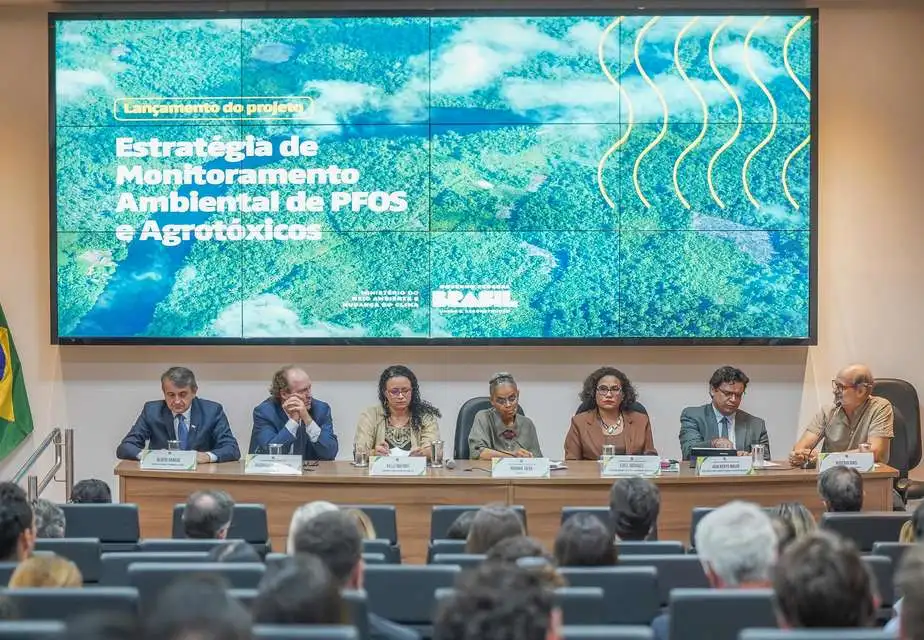
for envrionmental monitoring and the use of pesticides. © Rogério Cassimiro/MMA via Flickr
There’s still a lack of social and environmental commitment in our rural elites. But we already have, as you said, divisions. They are significant for the cultural shift to producing better quality products e.g. organic chicken. Brazil is a major exporter of chicken; over 100 countries buy them.
But what percentage of Brazilian chicken is organic?
It’s very small. And this has a lot to do with production costs. It’s still more expensive to produce a quality organic product due to a number of things. We need more research that could make it cheaper. But there are also public policies that Brazil could copy from other countries. A number of countries tax ultra-processed products and, with this money, subsidize organic, healthy products. This compensatory mechanism is increasingly being used by European Union countries. So there is a remedy. But it’s a remedy that is often bitter from a political point of view. You need the political courage to face it. That’s the decision that governments have to make.
The agroindustry claims that it is not possible to produce food organically in sufficient quantities to feed the world’s population. Is that correct in your opinion?
Unfortunately, that is true under the current conditions. The agricultural industry, with its vast quantities of pesticides and fertilizers, is now dominant worldwide. However, that does not mean that it must always be that way. I believe that an ecological transition is necessary. Agriculture must become less aggressive towards nature. This change must be driven by politics. It will not happen by itself because farmers are mentally trapped in their system.
Do you think the Mercosur-European Union agreement would be beneficial for developing a healthier, organic exchange, or would it be counterproductive?
If the agreement was approved under the terms it was designed 25 years ago, it would not be good for either party. This agreement should have been updated, especially because of environmental and health issues. Today, we know much more than we did 25 years ago about products that are harmful to health and the components that can and cannot be used.
The UN is under scrutiny, and many countries push for reforms, mainly for financial reasons. What could be done to make the institutions involved in food more effective?
I have some ideas, but they aren’t easy to implement. In fact, the UN system grew a lot, and in a disorganized way. Each country that wanted to create an organization formed a group of countries, guaranteed financial support, and created a new organization, e.g., the World Food Program. This went somewhat out of control, as did personnel expenses. When the UN system was created after the war, it offered a benefit: the salary paid in the UN system had to be 15% above the national salary to attract the best professionals. This continues to this day and is unjustifiable. We don’t need to pay more than the national salary. When I arrived at FAO, 80% of the resources it received from countries were committed to paying staff, leaving only 20% to do the things it was created to do. We need a lighter structure, and we have to fundamentally eliminate the overlapping of responsibilities.
This amounts to a merger of the World Food Programme and the FAO. What else could be done?
Changes start with the location of the headquarters. When the FAO went to Rome, it had a very objective reason: to help with the recovery from World War II. Italy was one of the most devastated regions and had the highest incidence of hunger on the planet. Today, it makes no sense to have a headquarters in Rome, New York, or Geneva. Let’s multiply our headquarters in countries that need it, in the third world, particularly in Africa.
First published in the Welternährung
https://www.welthungerhilfe.org/global-food-journal/rubrics/agricultural-food-policy/mr-graziano-how-do-we-rid-the-world-of-hunger