Marketed aggressively by major multinationals around the world, ultra-processed foods are reshaping diets — and health outcomes — across the Global South
By Richard Seifman and Claude Forthomme | Impakter | 17/08/2026
Ultra-processed foods (UPFs) have become a major concern in global public health, not only because they are linked to chronic diseases, notably obesity — they are calorie-rich and nutrient-poor — but also because geopolitical and commercial forces shape where, how, and to whom they are marketed.
This analysis focuses on the impact of American UPFs on the Global South, since the United States is home to many of the world’s largest UPF manufacturers. But it should also concern Europeans, as major UPF manufacturers are based in Europe and their impact across the world is very similar: In every case, national regulations governing food additives, processing methods, and marketing practices in the manufacturer’s home country have implications well beyond national borders.
The recent expansion of American UPF-producing companies into African markets is of particular interest, showing how the U.S. food system is increasingly shaping diets across the continent and affecting consumption patterns, health outcomes, and national food policies.
Current science on UPFs
The scientific literature on UPFs has expanded rapidly, with multiple umbrella reviews synthesizing epidemiological evidence across millions of participants. A 2026 umbrella review in Nutrition Reviews found consistent associations between high UPF consumption and increased risk of obesity, respiratory disease, type 2 diabetes, cardiovascular disease, digestive disorders, mental health conditions, and multiple cancers.
These findings echo an earlier, 2024 umbrella review in The BMJ, which reported convincing or highly suggestive evidence linking UPF exposure to early mortality, cardiometabolic disease, depression, anxiety, adverse sleep outcomes, wheezing, and obesity.
These reviews build on the NOVA classification system, which defines UPFs (Group 4) as industrial formulations made largely from extracted substances and cosmetic additives rather than whole foods. Crucially, as the 2025 Lancet series on UPFs underscored, the health risks of these foods do not stem merely from poor nutrient profiles (high fat, sugar, or salt). Rather, the industrial processing itself actively alters the food matrix, driving adverse health outcomes through mechanisms like rapid digestibility and gut microbiota disruption.
The 2025 Lancet series marked a turning point in global health, demonstrating that UPFs are a “distinct category of harm and a major structural driver of the global obesity crisis, with profound implications for equity, sustainability, and food sovereignty,” as mentioned in a May 2026 commentary on the Series by the Policy and Prevention Committee of the World Obesity Federation.
The spread of UPFs across the Global South to date
To understand the situation in Africa, it helps to look at Latin America, which was a natural market for American firms long before Africa opened up. This has exposed Latin America to UPFs far longer and, so far, the region has shown a commendable ability to alert consumers to health and nutrition concerns. Africa, by contrast, is a newer market experiencing rapid population growth and health challenges and has, as a result, been much slower to respond.
Regulatory food policies in Latin America
International organizations had a definite impact on the evolution of national food policies and regulations in the region. Notably, the Pan American Health Organization (PAHO/WHO) views UPFs as a primary driver of the obesity and noncommunicable disease epidemics in the Americas. Through the PAHO Nutrient Profile Model, PAHO has actively advocated for policies that restrict their marketing, mandate front-of-package warning labels, and discourage their consumption.
At the country level, in 2010, Mexico established the region’s first front-of-pack nutritional labeling framework, requiring Guideline Daily Amount (GDA) icons on packaged foods under standard NOM-05 and becoming the world’s strictest front-of-package labeling law for certain processed food and non-alcoholic beverage products.
In October 2014, under then President Michelle Bachelet (now a candidate for UN Secretary General), Chile restructured its tax on non-alcoholic beverages by increasing the levy on high-sugar drinks to 18% while reducing it for low-sugar alternatives. Two years later, Chile tightened its broader framework with the landmark Law 20.606, introducing the world’s first mandatory front-of-package black “stop-sign” warning labels (octagonal with the wording “alto en,” meaning “high in”) alongside strict bans on marketing such UPFs to children, including in schools.
Chile and Mexico were not isolated cases; they sparked a regional regulatory wave. Peru, Uruguay, Argentina, and Colombia all adopted mandatory front-of-package warning systems and marketing restrictions.
In conclusion, far from remaining passive, Latin America has established the world’s most aggressive regulatory front against poor diet quality. The rapid spread of octagonal warning labels and targeted taxes across the region proves that food processing and nutrition can drive decisive, large-scale public health policy.
The situation in Africa
In contrast to Latin America’s regulatory assertiveness, Africa is increasingly targeted by transnational food corporations as a prime growth market. It has long attracted major European conglomerates such as Nestlé (Switzerland), Unilever (UK), and Danone (France).
Now, as American multinational food companies have extended their activities to virtually all corners of the world, Africa, a continent projected to have the fastest population growth in the world in the years to come, has now become a particularly attractive prospect. Yet, it is still true that across much of the continent, European manufacturers hold comparable to or even greater shares than US giants like Coca-Cola, PepsiCo or Mondelez.
Studies from the African Centre for Biodiversity, a research and biosafety advocacy centre based in South Africa, evaluating the overall situation in Africa, warn that this corporate penetration — bolstered by expanding supermarket networks and weak local marketing restrictions — is rapidly displacing traditional nutritious, minimally processed diets with cheap ultra-processed formulations.
Bottomline, major manufacturers — including PepsiCo, Coca-Cola, Kraft Heinz, Mondelez, and others, including Europeans — shape global food availability, pricing, and nutritional quality.
According to the widely-read Nyéléni Newsletter, published by the Food Sovereignty Movement, recent data (see the 2019 Monteiro study and Global Food Research 2023) show that investment in UPFs (breweries, distilleries, soft drinks, sugar products) comprises 22% of all foreign direct investment into the food system and is double that invested into farms and plantations.
The influence of those major conglomerates over supply chains, retail environments, and consumer behavior is closely tied to the nature and shape of regulatory systems in their home countries. Here we shall examine more closely the U.S. system, keeping in mind that multiple agents contribute to the process, including U.S. trade missions, industry conferences, and promotional campaigns that also help expand African demand for American food products.
In 2024, U.S. processed food exports to Sub-Saharan Africa totaled $523.6 million. These exports include snack foods, non-alcoholic beverages, sauces, condiments, pasta, processed cereals, and other UPF categories. The U.S. and other exporters have made processed food increasingly significant in African retail markets.
Intensive advertising is one factor driving this growth. For example, a 2024 study in PLOS Global Public Health found that UPFs are heavily promoted around schools in Kenya, with nearly half of mapped food advertisements featuring UPFs.
More broadly, companies often target children through cartoon characters, mascots, price discounts, digital advertising, emotional appeals, and placement near schools and community centers. As a result, UPFs are not only widely available but also aggressively marketed, shaping eating habits from an early age.
The role of the U.S. at home and abroad
How the U.S. Government regulates food providers: The United States regulates food additives through Title 21 of the Code of Federal Regulations, particularly Part 170, which requires substances added to food — whether directly or indirectly — to either undergo premarket approval or qualify as “Generally Recognized as Safe” (GRAS).
The GRAS pathway has allowed manufacturers to self-affirm the safety of additives without formal Food and Drug Administration (FDA) review, provided the substance has a history of safe use or is supported by publicly available scientific evidence.
Criticism of the GRAS system: Former FDA Commissioner Dr. David Kessler and others have criticized the GRAS system for favoring industry interests over precautionary public health protections. Kessler has filed a citizen petition seeking to revoke the GRAS status of certain processed refined carbohydrates. Robert F. Kennedy Jr., the current Secretary of Health and Human Services, has expressed similar concerns. Although his department has begun reviewing UPFs, it has not yet taken concrete action.
Kessler was deeply involved in efforts to limit tobacco use, which has parallels to UPF marketing. A 2026 study in the American Journal of Public Health documents how U.S. tobacco companies — Philip Morris and R.J. Reynolds — applied cigarette-selling tactics to market UPFs worldwide. These strategies included manipulating product size (e.g., “king-size” sugary drinks), engineering “light” versions of products to appear healthier, and building integrated distribution networks across continents.
The FAO/WHO blueprint
Both the Food and Agriculture Organization of the United Nations (FAO) and the World Health Organization (WHO) have built frameworks for regulating unhealthy food environments.
WHO’s Global Plan of Action for Non-Communicable Diseases recognizes UPFs as a public health concern. Key elements of WHO guidance include:
- Recommendations to limit UPFs in national dietary guidelines;
- supporting fiscal measures such as sugar taxes;
- Front-of-package labeling (FOPL) systems such as warning labels;
- policies to restrict marketing to children, especially for sugary beverages and snacks;
- promotion of whole foods and minimally processed diets.
FAO’s approach focuses on food systems and agricultural policy through:
- encouraging traditional food systems and local production;
- highlighting the role of UPFs in dietary transitions and biodiversity loss;
- supporting nutrition-sensitive agriculture to reduce reliance on imported UPFs;
- collaborating with WHO on global dietary guidelines.
Of major significance is the UPF link to One Health, which brings another critical perspective to bear.
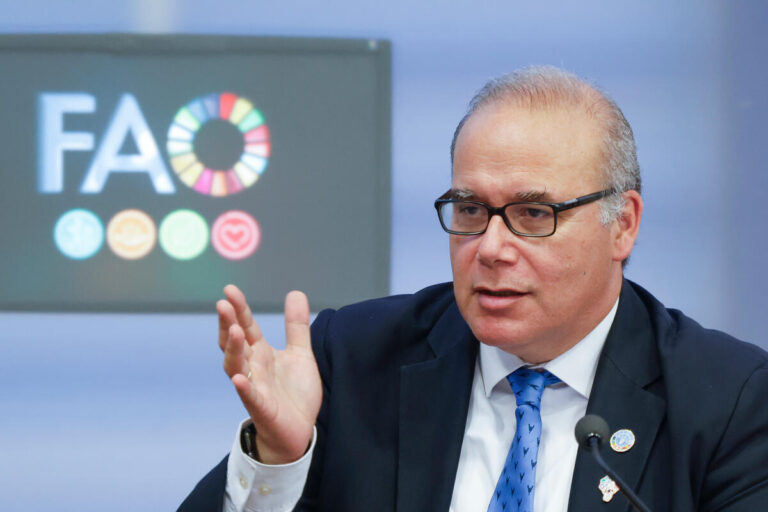
As José Graziano da Silva, Director-General at FAO (2012-2019), put it in a recent Impakter article: “One Health approach recognizes that human and animal health, environmental sustainability, and food systems are inseparable. The rise of ultra-processed foods is deeply connected to industrial agricultural models based on monocultures, excessive chemical inputs, aggressive food marketing, and highly concentrated supply chains. These systems contribute not only to chronic diseases but also to biodiversity loss, environmental degradation and climate change.”
Together, FAO and WHO offer governments a policy framework and a course of action to reduce the health consequences of UPFs.
For example, Kenya could adopt WHO’s nutrient profile model and enforce marketing bans around schools; Nigeria may introduce fiscal measures and front-of-pack labels; Ghana could strengthen structural interventions; South Africa might expand marketing restrictions and accelerate labeling reforms.
In short, African countries need not wait for new evidence; they can use what is already known about UPFs to guide their people’s choices about what they eat and how those choices affect health.
Admittedly, this agenda remains aspirational, even at the international level. WHO and FAO face significant obstacles, including industry lobbying, divergent national interests, member-state resistance, and the absence of binding regulatory authority. Even so, they offer the international community, regions, and individual countries a useful roadmap for addressing the health risks associated with UPFs.
The future of UPFs and Africa
UPFs are a distinct category of harm and a major structural driver of the global obesity crisis, with profound implications for equity, sustainability, and food sovereignty.
Looking specifically at Africa, throughout much of the continent, even where there are marketing policy regulations, enforcement is weak. Fiscal measures are rare, despite evidence that well-designed taxes could reduce UPF consumption. Front-of-pack labeling — a politically easier way to shift consumer behavior — is almost nonexistent.
Amid many competing challenges, unfortunately, this issue has not been treated as a priority. Unless things change, African diets are likely to increasingly resemble those of high-income countries, where UPFs are widespread and noncommunicable diseases are among the leading causes of death.
First published on Impakter
https://impakter.com/ultra-processed-foods-great-export-for-america-bad-news-for-the-worlds-health/